Horsepower is a key specification to consider when selecting a tractor, and it’s one of the most commonly misunderstood factors. Farmers and agricultural contractors in UAE need to understand tractor horsepower (HP) to choose the right machine for different farm sizes, soil conditions, and farming implements.
In simple terms, tractor horsepower measures how much work a tractor can perform over time. The greater the horsepower, the more power available for pulling, lifting, and operating agricultural equipment.
At AgroAsia Tractors UAE, we help farmers select tractors based on real field requirements rather than only technical specifications.
What Does Tractor Horsepower Mean?
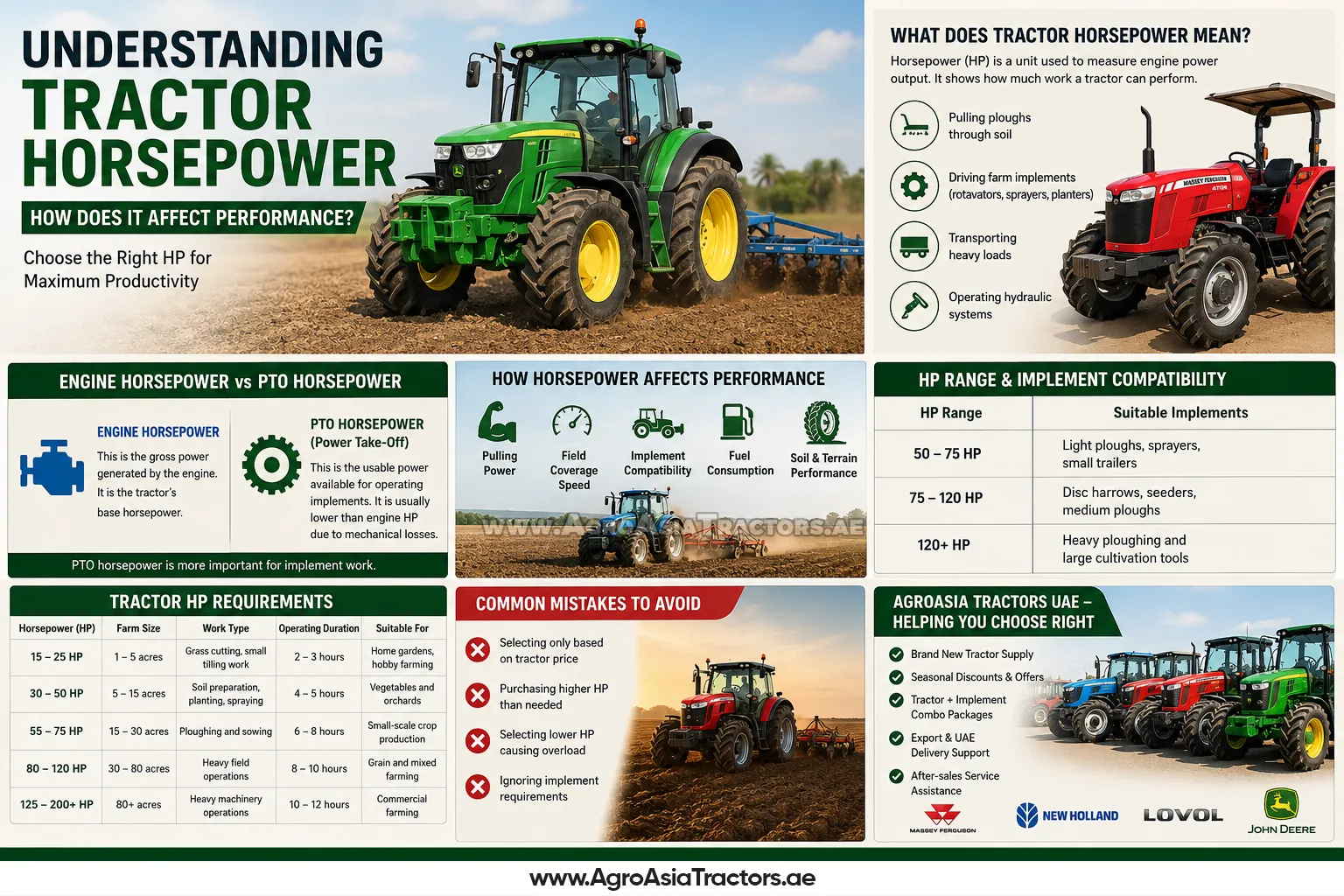
Horsepower (HP) is a unit used to measure engine power output. It indicates the tractor’s ability to perform tasks such as:
- Pulling ploughs through soil
- Driving farm implements (rotavators, sprayers, planters)
- Transporting heavy loads
- Operating hydraulic systems
There are two important horsepower measurements for tractors:
Engine Horsepower
This is the gross power generated by the engine and represents the tractor’s base horsepower.
PTO Horsepower (Power Take-Off)
This is the usable power available for operating implements such as rotavators, sprayers, and seeders. PTO horsepower is usually lower than engine horsepower because of mechanical losses.
Note: PTO horsepower is more important when evaluating implement performance.
How Horsepower Relates to Tractor Performance
1. Pulling Power
Higher horsepower tractors can efficiently operate larger implements including:
- Disc ploughs
- Harrows
- Trailers
More horsepower reduces engine strain and provides smoother operation.
2. Field Coverage Speed
Higher horsepower allows tractors to:
- Cover larger areas in less time
- Finish ploughing and planting faster
- Reduce overall working hours
This is particularly valuable for large farms and desert agriculture projects in UAE.
3. Implement Compatibility
| HP Range | Suitable Implements |
|---|---|
| 50–75 HP | Light ploughs, sprayers, small trailers |
| 75–120 HP | Disc harrows, seeders, medium ploughs |
| 120+ HP | Heavy ploughing and large cultivation tools |
4. Fuel Consumption
Horsepower also affects fuel usage:
- Higher HP tractors consume more fuel per hour
- They complete work more quickly
- Efficiency improves during large-scale operations
5. Soil & Terrain Performance
Under UAE farming conditions including sandy soils, dry land, and large farms:
- Higher horsepower improves traction
- Reduces wheel slippage
- Increases operational stability
Choosing the Right Tractor Horsepower
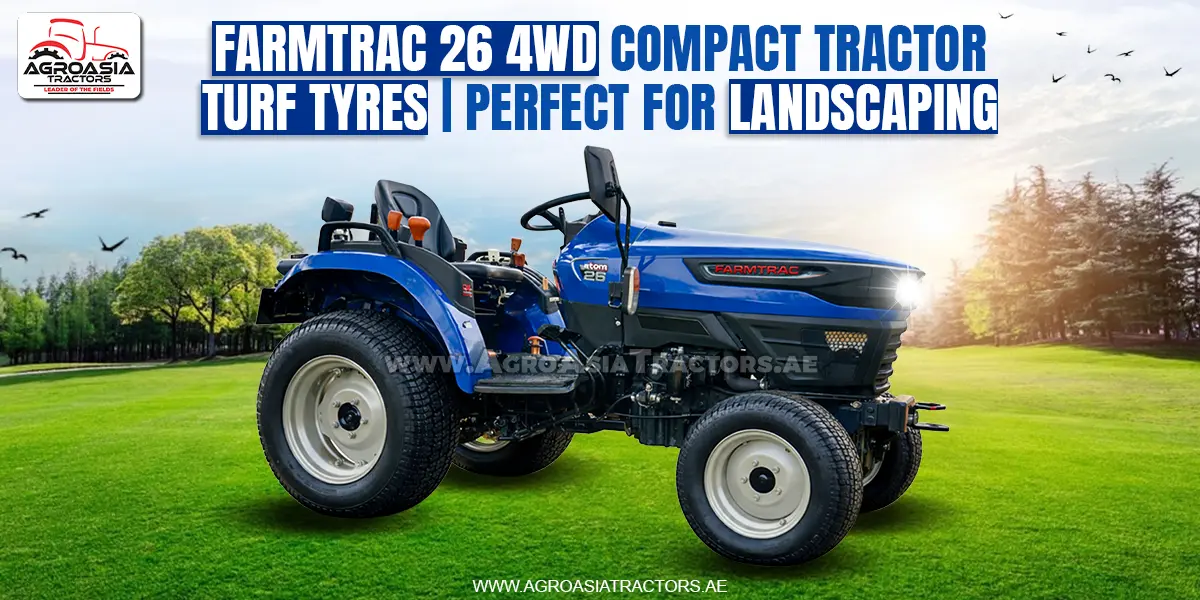
- Small farms: 15–50 HP
- Medium farms: 55–110 HP
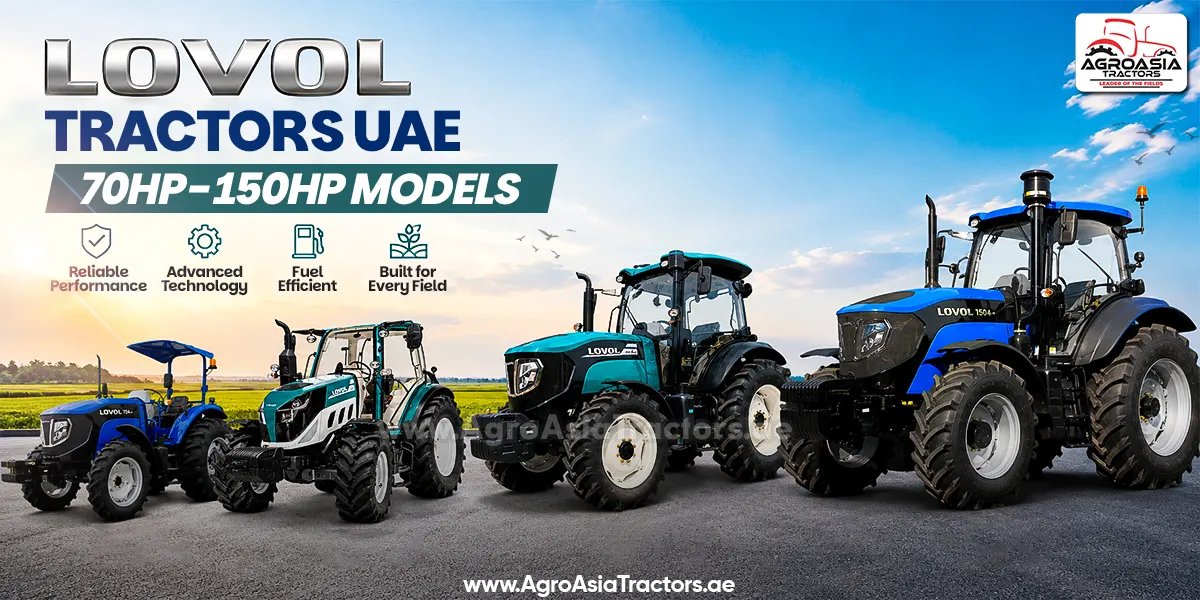
- Large farms: 110–200+ HP
The objective should not be maximum horsepower, but selecting the correct horsepower for the workload.
Understanding Tractor HP Requirements
| Horsepower (HP) | Farm Size | Work Type | Operating Duration | Suitable For |
|---|---|---|---|---|
| 15–25 HP | 1–5 acres | Grass cutting, small tilling work | 2–3 hours | Home gardens, hobby farming |
| 30–50 HP | 5–15 acres | Soil preparation, planting, spraying | 4–5 hours | Vegetables and orchards |
| 55–75 HP | 15–30 acres | Ploughing and sowing | 6–8 hours | Small-scale crop production |
| 80–120 HP | 30–80 acres | Heavy field operations | 8–10 hours | Grain and mixed farming |
| 125–200+ HP | 80+ acres | Heavy machinery operations | 10–12 hours | Commercial farming |
Common Mistakes to Avoid
- ❌ Choosing only based on tractor price
- ❌ Purchasing higher HP than needed
- ❌ Selecting lower HP causing overload
- ❌ Ignoring implement requirements
AgroAsia Tractors UAE – Helping You Choose Right
We help farmers and agricultural contractors choose the ideal tractor based on:
- Farm size
- Soil type (desert, clay, mixed)
- Implements used
- Budget and fuel efficiency requirements
Available tractor brands:
Available services and offers:
- ✔ Brand new tractor supply
- ✔ Seasonal discounts and offers
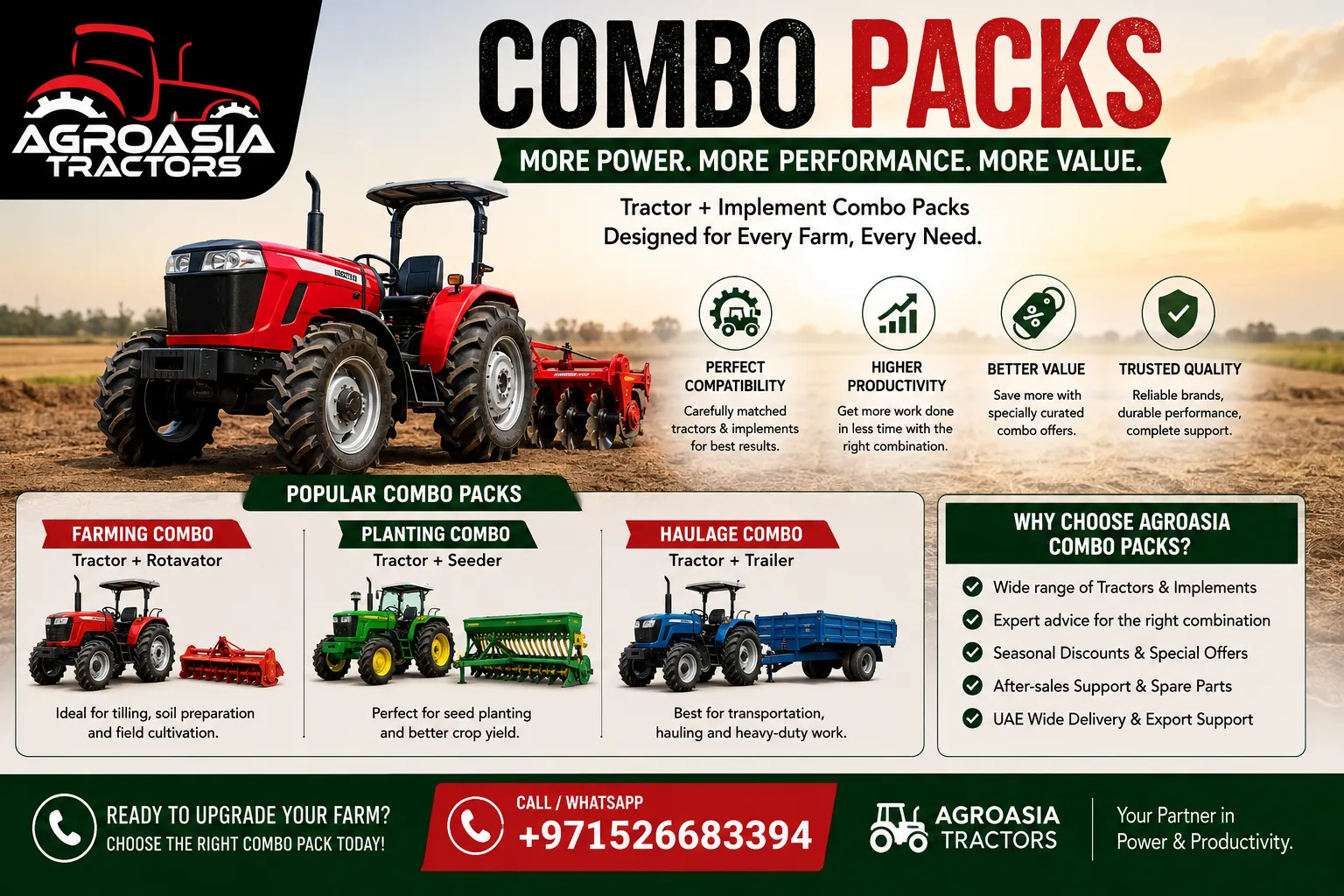
- ✔ Tractor + implement packages
- ✔ Export and UAE delivery support
- ✔ After-sales service assistance
FAQs
What is the ideal tractor horsepower for farming?
For medium-sized farms, tractors between 75–110 HP are commonly recommended.
Is higher horsepower always better?
No. Higher horsepower can increase fuel costs if unnecessary. Choosing the correct HP for your workload is more important.
What does PTO stand for?
PTO stands for Power Take-Off, which provides power to operate farming equipment like rotavators and sprayers.
How do I determine the right HP requirement?
The required horsepower depends on land size, soil type, and implements used.
Does engine horsepower affect fuel usage?
Yes. Higher horsepower generally consumes more fuel, but it can complete work faster and improve overall efficiency.